
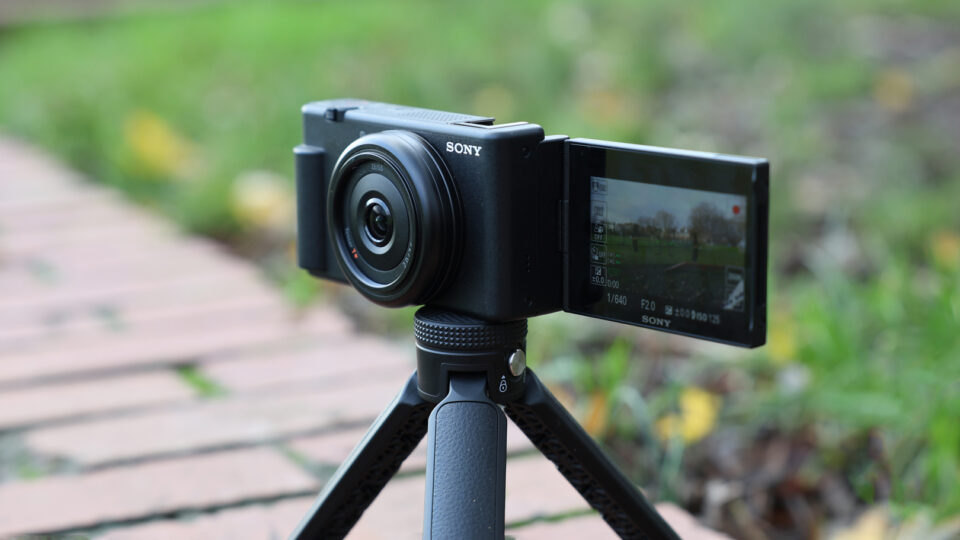
The best cameras for vlogging in 2026 depend heavily on your production style. For most beginners, the Sony ZV-E10 II remains the top choice due to its excellent autofocus and flip screen. If you’re a “run-and-gun” creator, the Sony RX100 VII offers incredible portability, while scripted indoor creators might prefer a full-frame setup like the Sony ZV-E1 for superior low-light performance.
Here’s what experienced vloggers actually use – and more importantly, why.
Best Vlogging Cameras: Complete Comparison
| Camera | Price | Video Quality | Screen | Autofocus | Stabilization | Best For |
|---|---|---|---|---|---|---|
| Sony ZV-E10 II | ~$750 | 4K/120fps | Flip-out | Excellent (eye tracking) | Digital (IBIS optional) | Beginners to intermediate |
| Sony ZV-1 II | ~$500 | 4K/30fps | Flip-out | Very good | Optical IS | Ultra-compact; travel |
| Canon PowerShot V10 | ~$430 | 4K/30fps | Flip-out | Good | Digital | Absolute beginners |
| DJI Osmo Pocket 3 | ~$520 | 4K/120fps | 2″ touchscreen | Excellent | Gimbal built-in | Run-and-gun, travel |
| Sony ZV-E1 | ~$2,200 | 4K/120fps | Flip-out | Best in class | IBIS + OIS | Professional/full-frame |
| GoPro Hero 12 | ~$350 | 5.3K/60fps | Small rear | Good | HyperSmooth | Action/adventure |
| Canon EOS R50 | ~$700 | 4K/30fps | Flip-out | Excellent (Dual Pixel) | Digital + Lens IS | Canon ecosystem |
| Fujifilm X-S20 | ~$1,300 | 6.2K/30fps | Flip-out | Good | IBIS | Film simulation fans; aesthetics |
What Vloggers Actually Need vs What Reviewers Say They Need
Most camera reviews focus on specs. Vloggers need to think about workflow. The features that matter most in practice:
| Feature | Why It Actually Matters |
|---|---|
| Flip-out/articulating screen | You need to see yourself while filming yourself. Non-negotiable. |
| Fast, reliable autofocus | If it misses focus mid-sentence, the clip is unusable |
| Good audio input (3.5mm) | Camera mics are almost always inadequate; you’ll want a shotgun mic |
| In-body image stabilization (IBIS) | Walking shots without a gimbal – smooth vs unwatchable |
| Battery life | Can you shoot a full day without hunting for outlets? |
| Size and weight | What you’ll actually carry vs what stays at home |
Budget Tiers: Realistic Recommendations
Under $500: The Starter Setup
Sony ZV-1 II or Canon PowerShot V10
Both have flip screens, good autofocus, and 4K video. The ZV-1 II edges out on video quality; the V10 on simplicity. Either is genuinely capable for YouTube and social media content.
Don’t buy: A DSLR “because it looks professional” in this range. Mirrorless and compact cameras are better video tools.
$500-$1,000: The Sweet Spot
Sony ZV-E10 II or Canon EOS R50
Both are mirrorless cameras with interchangeable lenses, flip screens, and excellent autofocus. The Sony has slightly better low-light performance; the Canon has Dual Pixel AF which tracks subjects beautifully.
If you’re planning to grow a channel seriously, this range gives you enough quality to stop thinking about the camera and start thinking about the content.
$1,000-$2,000+: The Upgrade
Fujifilm X-S20 or Sony A7C
The X-S20 is for creators who care about the aesthetic look of their footage – Fujifilm’s film simulations give a film-like quality that requires significant color grading to replicate on Sony or Canon. The Sony A7C is a full-frame option for indoor, controlled-light environments.
The DJI Osmo Pocket 3: The Wildcard
The DJI Osmo Pocket 3 doesn’t fit neatly into any category – it’s a 3-axis gimbal camera about the size of a thick pen. It’s not an interchangeable lens camera, but it shoots 4K/120fps, has a built-in gimbal that eliminates shake entirely, and is genuinely pocketable.
For travel vloggers and run-and-gun content creators, it’s arguably the best tool in any price range. The gimbal means you’ll never have a shaky shot regardless of how aggressively you’re moving.
Microphone Recommendation
The single biggest upgrade most vloggers can make isn’t the camera – it’s the microphone. A $120 Sony ECM-B10 or Rode VideoMicro II attached to any camera on this list will make your audio noticeably better than a $3,000 camera with no external mic.
The Bottom Line
The best camera for vlogging is the one you’ll actually carry and use consistently. For most creators, the Sony ZV-E10 II delivers the best combination of video quality, autofocus, portability, and price. If you want something pocketable with zero shake, the DJI Osmo Pocket 3 is exceptional. Buy the camera, add a microphone, and focus on content – the gear is the smallest variable in whether your channel grows.
