
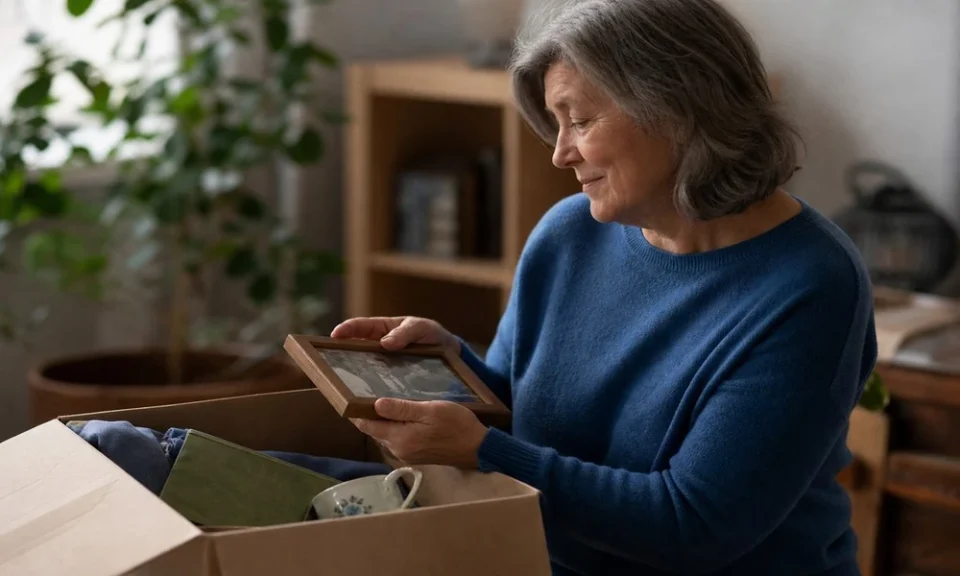
Estate documents and household belongings
Important estate documents can be tucked in filing cabinets, buried in a desk drawer with everyday bills and mail, wedged between books, etc. As you sort through your loved one’s things, pay special attention to important documents. It might help to have a box or bag clearly marked “important documents” and set these items aside as you find them. Important items to keep separate could include:
- Important documents like insurance policies, property deeds/titles, legal documents, etc.
- Important financial information like account info, financial statements, tax returns, etc.
- Letters, journals/diaries, photos and other family records/heirlooms
- Spare keys, cell phones/computers/tablets, information on how to gain access to the property, etc.
- Prescriptions/medication, identification, bills and mail that may need attention, etc.
Once you’ve completed the first round of sorting through your loved one’s things, go back through any of the mail/documents you set aside to make sure there’s nothing important before tossing anything. There may be information in there on how to close an account, contact information for service providers, asset information, etc.
Secure Important and Sentimental Items
Jewelry, cash, collectibles and other expensive/sentimental items can be challenging to sort through and are best removed from the property and stored in a secure location as you find them. Leaving valuables in an estate can be risky, and having boxes strewn about makes it even more challenging to figure out what’s been dealt with and what hasn’t.
Sort Items Into Manageable Categories
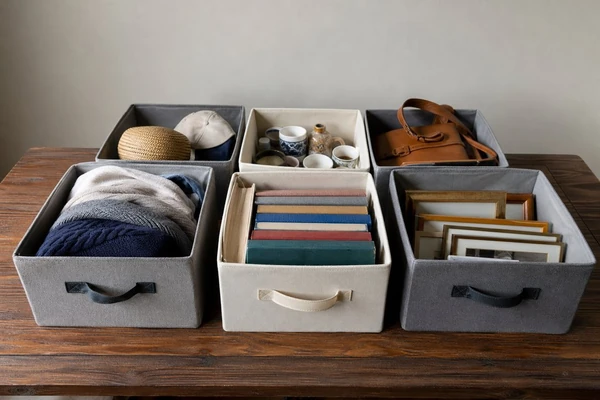
Organized household items and storage boxes
It’s best to have separate piles/bags/boxes for items you want to keep, items to divide up among family, items to donate, items to sell, items to recycle, and items to trash. Exact piles do not matter, this is just a way to keep things moving and avoid going back through the same pile over and over again – for local support, the Caring Transitions service page is at https://www.caringtransitions.com/service/decluttering-services/san-diego-ca, with the service scope outlined there.
Items like photos, collections, military memorabilia, heirlooms, handmade items, etc. may be better set aside for now, especially if you’re not sure how they should be handled. These items likely have more sentimental value than monetary value and it may be best to let other family members weigh in before making a final decision.
Divide the Job Into Manageable Tasks
Tackle one area at a time, a single closet, room, cabinet, etc. Try to complete one task before moving on to the next so you can see your progress along the way. Start with rooms/spaces that don’t have as many personal/sentimental items if possible, bathrooms, laundry/utility rooms, storage areas, etc.
Stay Safe and Make Realistic Decisions
Try to maintain a minimum of 36 inches of clearance in main pathways so things can be safely maneuvered throughout the property and there aren’t any tripping hazards. Staying organized will help here, loose items/bags of trash piled up throughout the property can quickly become unsafe.
Sorting through a deceased loved one’s things is mentally and physically exhausting, especially when you’re also dealing with grief. Try to pace yourself and take breaks as needed so you aren’t making hasty decisions.
Approach Donation, Selling, and Discard Decisions Realistically
Chances are there are a number of items in the property that could be donated, furniture, décor, dishes, linens, books, tools, etc. Many donation organizations will accept used household items as long as they’re in good, usable condition, make sure anything you’re planning on donating is complete, clean, and in good working order.
As for items you may want to sell, try to think objectively, just because something is an heirloom doesn’t mean it will be worth anything to someone else (and vice versa). If you’re unsure of the value of certain items, consider having them appraised before deciding what to do with them, this applies to anything from art, to antiques, to coins/collections, to unique/specialized equipment.
On the other hand, there are some items that should not be tossed in with everything else slated for donation/trash, expired/broken items, hazardous waste (there’s a decent explainer at epa.gov/hw/household-hazardous-waste-hhw) (i.e. medications, automotive fluids, chemicals, paint, etc.), damaged furniture, broken electronics, etc. will likely need to be handled/trashed a certain way.
When Is It Time to Call for Professional Help?
If there’s a lot of stuff/furniture to move, if there are overstuffed rooms/packed garages, if there are family members out of town, if you’re pressed for time, if you have any physical limitations, etc., it may be time to call for help. Not only will a professional crew be equipped to efficiently tackle the physically demanding tasks (heavy lifting, moving furniture, etc.), they’ll also be able to help with sorting items, organizing donations, hauling, packing, etc.
so the property can be turned over or prepared for its next use. If you’re considering getting help, just make sure you choose a team that will treat the process sensitively and work with you every step of the way. Be sure to ask about their process for documenting items, how they determine if an item may be valuable, what happens to unsalvageable items, etc. ahead of time.
