
Every October the fields around southern Adams County turn into a slow cloud. Combines work through corn and soybeans, grain trucks rattle down Route 97 and Route 194, and a fine tan film settles on porch rails and windowsills from Littlestown out toward Gettysburg and Hanover. Some of that dust stays outside. A surprising amount of it ends up inside, pulled through door gaps and window frames, then picked up by the return vents and sent around the house again and again.
Living in farm country means indoor air has more sources to contend with than a typical suburban house. Pollen arrives in waves from spring through fall, field dust peaks at planting and harvest, and older homes with stone foundations bring their own moisture. A forced air system touches all of it, because it moves the entire volume of the house through the same filter and ducts several times an hour.
For anyone comparing Littlestown serves services before booking a visit, a full service heating and cooling contractor based about twenty minutes south in Westminster, Maryland, handles both homes and commercial buildings and offers scheduled duct cleaning, filter replacement and damper adjustments as part of its air quality work, with a warranty attached to every job. Knowing where the dirt in your air comes from makes any of those services far more useful, so that is where this piece goes next.
The Dust That Rides In From the Fields
Outdoor particles are the biggest contributor in rural homes, and they follow the seasons. Tree pollen in April and May, grass pollen into June, ragweed from late August, then harvest dust layered on top in fall. Manure spreading in early spring and late fall adds odor more than particles, but it tells you how freely outside air is getting in.
The fix starts at the building, not the furnace. Weatherstripping on exterior doors, caulk around old window frames and a tight seal where the dryer vent and utility lines pass through the wall all reduce how much field air leaks in unfiltered. The less that leaks in, the less the HVAC system has to catch.
What Rises Up From the Basement
Many homes around Littlestown sit on fieldstone or block foundations that stay damp most of the year. Basements and crawl spaces matter because air in a house tends to move upward. Warm air escapes through the attic and pulls replacement air up from below, carrying musty smells, mold spores and moisture with it.
Pennsylvania also has widespread radon, and a leaky return duct in the basement can draw soil gas into the system and spread it upstairs. Sealing return ducts with mastic, running a dehumidifier to keep basement humidity under about 50 percent, and testing for radon are inexpensive steps that change what the furnace is breathing.
Habits Inside the Living Space
Everyday life produces its own particles. Cooking, pets, candles and especially wood stoves, which are common in rural homes, put fine smoke and ash into the air. A kitchen range hood that actually vents outdoors does more for air quality than one that recirculates. Bathroom fans should run long enough to clear steam, roughly twenty minutes after a shower.
Winter brings dry air, and many Adams County homes rely on whole house humidifiers mounted on the furnace. Those units deserve attention. A humidifier pad that sits wet all season can grow mold and scale, and it should be replaced every heating season.
The Filter Slot Is Where Most Mistakes Happen
Filters are the most misunderstood part of the whole picture. A cheap fiberglass filter stops large debris to protect the blower but does little for pollen or fine dust. Pleated filters in the MERV 8 to 11 range catch far more without choking airflow. Higher ratings like MERV 13 trap smaller particles, yet a one inch MERV 13 filter can restrict airflow in an older system, raising energy use and sometimes freezing an AC coil.
A deeper four or five inch media cabinet solves that problem, because the extra surface area lets a high efficiency filter breathe. During harvest and pollen peaks, checking the filter monthly rather than every three months is a smart habit in farm country.
Dampers Most Homeowners Never Touch
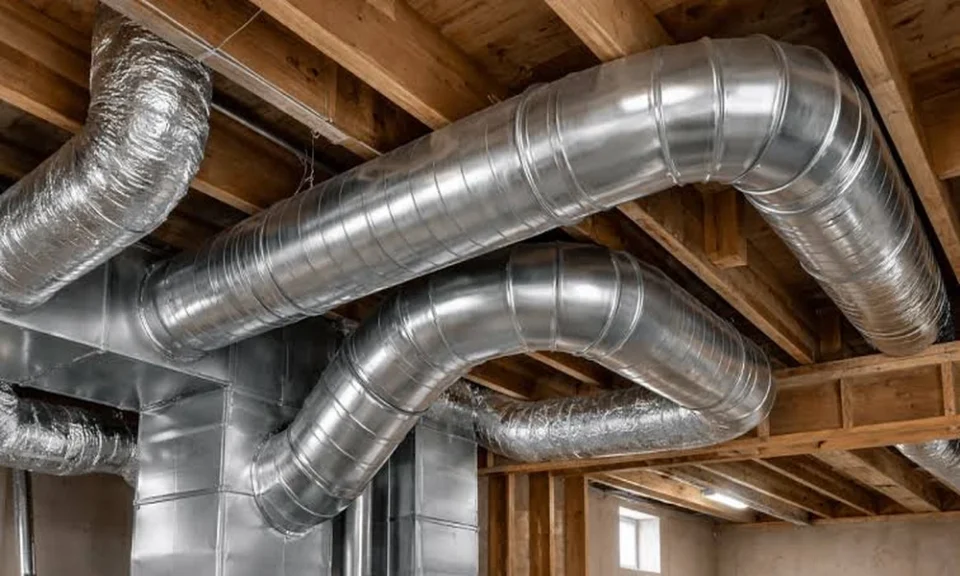
Tucked into the duct runs near the furnace, many homes have small levers on the side of the round pipes. Those are balancing dampers, and they control how much air goes to each part of the house. Few owners know they exist, which is why one floor often runs hot while another stays cold.
In a two story home, a common seasonal routine works like this.
- In summer, open the dampers serving upstairs fully and partially close those feeding the basement, since cool air sinks and the top floor needs help.
- In winter, reverse it by easing back on the upstairs runs and opening the lower ones, because warm air rises on its own.
- Mark each lever position with a marker so it’s easy to switch back next season.
Better balance also improves air quality, because rooms that get proper airflow get proper filtration too.
When the Ducts Themselves Need Cleaning
Duct cleaning has a mixed reputation, partly because of mailers promising miracle results for a low price. The U.S. Environmental Protection Agency’s guidance on whether to have home air ducts cleaned says cleaning makes sense when it’s needed rather than on a fixed schedule. Situations that justify it include visible mold growth inside sheet metal ducts or on system parts, evidence of rodents or insects living in the ductwork, or enough debris that it actually blows out of the registers.
Fresh construction dust after a renovation is another good reason, since drywall sanding can coat the inside of a system in a single afternoon. Insulated duct board or lined ducts that have gotten wet are a different story. They usually need to be replaced, not cleaned. A reputable crew will show you what they find before and after, cleaning supply and return sides along with the blower and coil.
Clean Air Out Here Takes a Whole House View
In homes surrounded by working fields, indoor air quality is never handled by one gadget or one service call. It comes from sealing the shell so less field dust leaks in, drying the basement so less moisture rises, choosing a filter the system can actually push air through, and balancing airflow so every room gets its share. Having the system looked over before cooling season and again before heating season ties those pieces together, and it gives homeowners a chance to ask what they can keep up with on their own between visits.
