
If your pet keeps having urinary accidents, straining to urinate, passing blood, or cycling through one infection after another, you are probably tired in a way that is hard to explain. You clean up messes, watch the litter box or the yard like a hawk, and wait for the next setback even after antibiotics or other treatment seemed to help. Recurring urinary problems in pets are frustrating because the signs can look the same each time, even when the cause is not. If you are looking for a veterinary clinic in Hamilton, ON, getting a thorough evaluation can help identify what is really going on.
This is where cystoscopy can change the conversation. Instead of guessing from symptoms alone, veterinary hospitals can use a tiny camera to look directly inside the urinary tract. That view can help uncover structural problems, chronic inflammation, stones, masses, abnormal tissue, or birth defects that standard testing may miss. For pets with repeat issues, veterinary cystoscopy for urinary problems often gives answers that urine tests and X rays cannot fully provide.
Cystoscopy gives veterinarians a direct view of the urinary tract
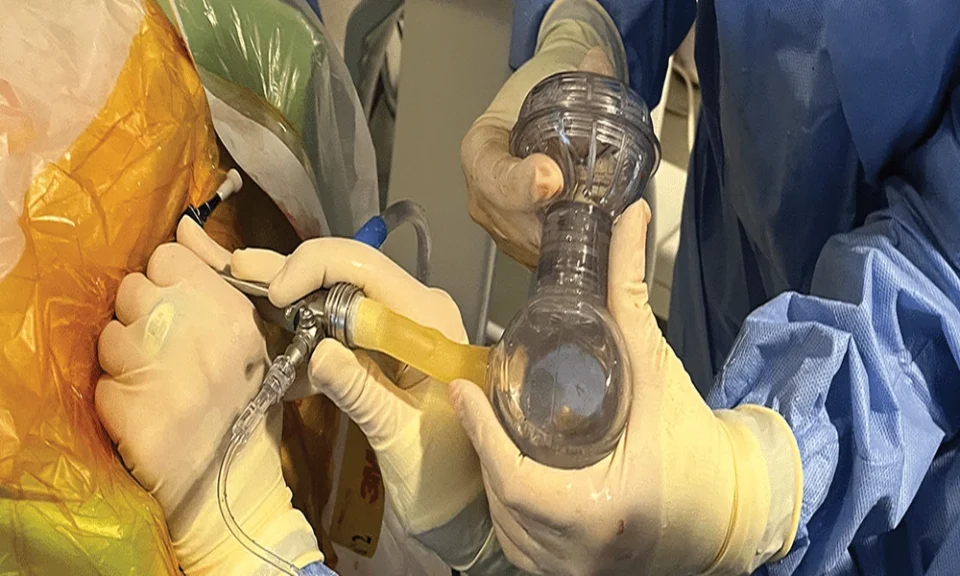
Cystoscopy is a minimally invasive procedure that uses a small scope with a camera to examine the urethra, bladder, and in some cases the openings to the ureters. In many animal hospital settings, it is used for dogs and some cats when urinary signs keep returning or when imaging suggests something unusual but not yet clear.
The value is simple. A urine sample can show blood, bacteria, crystals, or inflammatory cells. An ultrasound can show a thickened bladder wall or a suspected stone. Those tests matter, but they do not always explain why the problem keeps happening. A scope lets the veterinary team inspect the lining of the urinary tract in real time, collect tissue samples, retrieve stones or foreign material in some cases, and look for defects such as ectopic ureters.
An ectopic ureter is a congenital problem where a ureter does not connect to the bladder in the normal place. That can lead to constant leaking, recurrent infections, and years of confusion if the signs are mistaken for behavior or simple incontinence. Iowa State University describes how minimally invasive procedures can help identify and treat ectopic ureters in dogs.
Recurring urinary issues often have deeper causes than infection alone
A pet can improve on medication and still not be truly better. That is the trap with recurring urinary disease. If the real issue is an anatomic abnormality, a polyp, chronic cystitis, a lodged stone, or a narrowing in the urethra, symptoms may keep returning because the source was never fully addressed.
You may have already been through this pattern. Your dog strains, has accidents, or licks obsessively. Your cat starts visiting the litter box over and over, producing tiny amounts of urine. You go in, testing is done, treatment starts, things settle down, then a few weeks or months later it starts again. Repetition wears people down, and it can delay the next step because you want to believe the last treatment should have fixed it.
Veterinary hospitals use cystoscopy when that cycle points to a problem that needs direct inspection. The University of Minnesota outlines advanced urology services for pets that include diagnostic tools for urinary tract disorders. The University of Florida also explains how urinary and genital tract endoscopy helps evaluate conditions affecting the bladder and urethra.
Cystoscopy in veterinary hospitals is also useful because it can reduce the need for more invasive surgery in selected cases. Some pets still need surgery, but others can be diagnosed or treated through the scope with less tissue trauma and often a smoother recovery.
Common reasons an animal hospital may recommend cystoscopy
A veterinarian may suggest this procedure when urinary symptoms keep returning without a clear explanation, when imaging shows a suspicious lesion, or when a younger pet has lifelong leaking that suggests a structural defect. It may also be recommended for blood in the urine, difficult urination, recurrent urinary tract infections, bladder stones, suspected tumors, or persistent inflammation that has not responded as expected.
The point is not to do a high tech procedure for its own sake. The point is to stop treating the same signs over and over without knowing what is driving them. A direct look can save time, money, and stress when repeat visits are adding up without a lasting answer.
Comparing standard urinary testing and cystoscopy in repeat cases
| Approach | What it can show | Limits in recurring cases | When it helps most |
|---|---|---|---|
| Urinalysis and urine culture | Bacteria, blood, crystals, inflammation, urine concentration | May confirm infection without explaining why it keeps returning | First line testing for most pets with urinary signs |
| X rays or ultrasound | Stones, bladder wall changes, masses, some structural concerns | May not show small lesions, mucosal changes, or exact ureter openings | Useful when stones or blockage are concerns |
| Cystoscopy | Direct view of bladder and urethra, biopsies, some minimally invasive treatment options | Requires anesthesia or sedation and specialty equipment | Best for pets with repeat symptoms, suspected defects, masses, chronic inflammation, or unresolved bleeding |
Three practical steps you can take now
Track the pattern. Write down when symptoms happen, how often your pet urinates, whether there is straining, blood, leaking, odor, or house soiling, and what treatment was given each time. Patterns help your veterinary team decide whether this looks like infection, incontinence, stones, inflammation, or a structural issue.
Ask what has already been ruled out. If your pet has had repeat urinary problems, ask whether prior testing explained the cause or only documented the signs. That one distinction matters. If the answer is still uncertain, ask whether a referral for advanced imaging, a urology workup, or a root service like cystoscopy for pets with urinary issues makes sense.
Get clear on the goal of the procedure. Before scheduling, ask whether cystoscopy is being used to diagnose, biopsy, remove material, or assess for a defect such as an ectopic ureter. You deserve to know what question the hospital is trying to answer and how that answer may change treatment.
Better answers can break the cycle of recurring urinary problems
When urinary trouble keeps coming back, the hardest part is not just the mess or the cost. It is the feeling that you are always reacting and never getting ahead of it. Cystoscopy gives veterinary hospitals a way to look past repeat symptoms and find what is actually going on inside the urinary tract.
If your pet is stuck in that cycle, ask your animal hospital whether a cystoscopic evaluation or referral to a veterinary urology service is the next right step. A clearer diagnosis often leads to a more targeted plan, and that is usually what both you and your pet have needed all along.
