
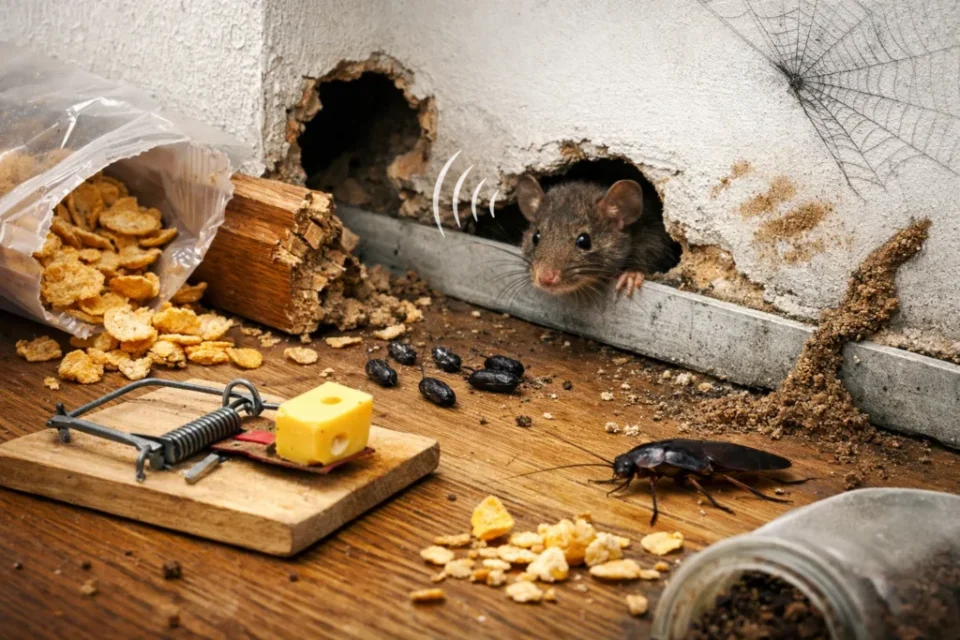
Most homeowners spot a bug and shrug it off. That one ant on the counter, the mouse you heard in the walls back in October – easy to explain away, easy to forget. But there’s a specific point where “a pest problem” quietly becomes “an infestation,” and the gap between those two things is measured in structural damage, health risk, and money.
The hard truth? That gap is almost always invisible until you’re already deep inside it.
This piece gives you a practical way to evaluate where you actually stand, season by season, room by room, before the situation makes that decision for you.
Why Ohio Homes Are Uniquely Exposed
Ohio’s four-season climate is genuinely rough on homeowners from a pest standpoint. Temperature swings are the engine that drives pest behavior. Insects wake up when air and soil temps cross roughly 50 degrees Fahrenheit in spring. Summer heat accelerates breeding cycles. When fall hits and temperatures drop, rodents and cockroaches stop looking for food outside and start looking for it inside your walls.
You’re not dealing with one pest season. You’re dealing with four consecutive ones, each with a different cast of characters. That’s a pattern that trips up a lot of homeowners who treat pest control as a warm-weather concern and then get blindsided by mice in November.
The table below maps out the primary threat by season so you’re not caught guessing.
| Season | Primary Pest Threats in Ohio | Most Common Entry Points |
|---|---|---|
| Spring | Termites, ants, stinging insects | Foundation cracks, mulch beds, wood-to-soil contact |
| Summer | Mosquitoes, wasps, cockroaches | Standing water, gaps around doors, utility lines |
| Fall | Rodents, stink bugs, spiders | Openings as small as a dime, window seals, attic vents |
| Winter | Rodents, cockroaches, overwintering insects | HVAC penetrations, wall voids, basement gaps |
The SCALE Framework: A Diagnostic You Can Actually Use
Pest professionals use a handful of consistent signals to gauge infestation severity. I’ve organized them into a framework called SCALE – five indicators that, taken together, tell you whether you’re dealing with a minor nuisance or something that needs professional intervention today.
S – Sightings, daytime. Nocturnal pests like cockroaches and mice showing up in daylight is a red flag. It usually means the population has grown large enough that nighttime activity isn’t cutting it anymore. One mouse after dark is different from one mouse at noon.
C – Concentrated evidence in multiple rooms. Droppings in two rooms, or gnaw marks on both the pantry and the garage door framing, means a colony or population is established. A single location could be a scout. Multiple locations mean the pest has already settled in.
A – Actual structural damage. This is where the cost calculator changes dramatically. Gnawed wires, hollowed baseboards, soft spots in wood flooring – these aren’t cosmetic problems. Termites cause billions of dollars in structural damage every year according to the U.S. Environmental Protection Agency, and property owners spend over two billion dollars annually just on treatment. The damage itself is typically not covered by homeowner’s insurance. If you’re seeing physical evidence of structural compromise, you’ve already lost time you can’t get back.
L – Live populations you can’t reduce. Tried a store-bought bait station or spray and the problem returned within a week? That’s not a product failure so much as a scale problem. Consumer-grade products work on small, localized populations. They rarely touch an established colony.
E – Evidence near beds or sleeping areas. Bed bugs deserve their own category here. According to the National Pest Management Association, pest professionals find bed bugs in 91% of single-family homes and 89% of apartments they treat. These aren’t hotel pests anymore. If you’re waking up with unexplained welts or finding dark rust-colored spots on your mattress seams, that’s not a wait-and-see situation.
Any two of these five signals in combination means you’ve crossed the line from “nuisance” to “infestation.” Three or more means you should be on the phone today.
The Rooms That Hide Infestations Best
Your kitchen and bedroom get the most attention, but the rooms that actually shelter the biggest pest populations tend to be the ones you inspect the least. Basements and crawl spaces offer the moisture, warmth, and undisturbed darkness that most pests need to establish a foothold. Attics are ideal for overwintering stink bugs, bats, and squirrels. Wall voids between rooms are a cockroach and rodent superhighway that you’d never see without pulling drywall.
Do yourself a favor: put a flashlight in your hand and spend ten minutes in your basement and attic, once per season. Look along the top of the foundation wall, around pipe penetrations, and at any wood that touches concrete. That ten-minute habit will catch problems when they’re still small enough to treat easily.
DIY vs. Professional Treatment: Where the Line Actually Is
This isn’t an anti-DIY argument. Caulking cracks, trimming vegetation away from your foundation, fixing dripping faucets, sealing garbage cans – all of that legitimately reduces pest pressure and you should do all of it.
But DIY stops working when:
- The pest species requires species-specific treatment chemistry (termites, bed bugs).
- The infestation is inside the structure, not just on the surface of it.
- You’ve tried a consumer product twice and seen no reduction in activity.
- You can’t locate the source of the problem after a thorough inspection.
Professional exterminators carry treatment options that simply aren’t available over the counter, and more importantly they know where to apply them. That’s not a sales pitch – it’s just the reality of how pest biology works at scale. A professional isn’t just spraying chemicals; they’re reading the pest’s behavior and cutting off its access to shelter, food, and water in a way a spray bottle can’t replicate.
Speed matters here more than most homeowners realize. If you’re in an area where fast response is available, take advantage of it. Same day pest control in Dayton, Ohio means you don’t have to spend another night letting an infestation dig in deeper while waiting on a week-long appointment queue.
One Mindset Shift That Changes How You Handle This
Think about pest control the way you think about car maintenance. You don’t wait until the engine seizes to schedule an oil change. You do it on a calendar, before the problem materializes, because the cost of prevention is a fraction of the cost of repair.
“Most people call us after the problem has been present for six months to a year without them realizing it. The signs were there earlier – they just didn’t know what to look for.” This kind of delayed response is consistently reported by pest management professionals across the industry, and it’s the primary reason infestations reach structural-damage levels before treatment begins.
A seasonal inspection – one in spring when termites swarm, one in fall before rodents push indoors – costs a fraction of what a structural repair or whole-home fumigation costs. And frankly, the peace of mind is worth the calendar event alone.
The question worth sitting with isn’t whether you currently have a pest problem. It’s whether you’d know if you did. Most homeowners find out the hard way. You don’t have to be one of them.
