
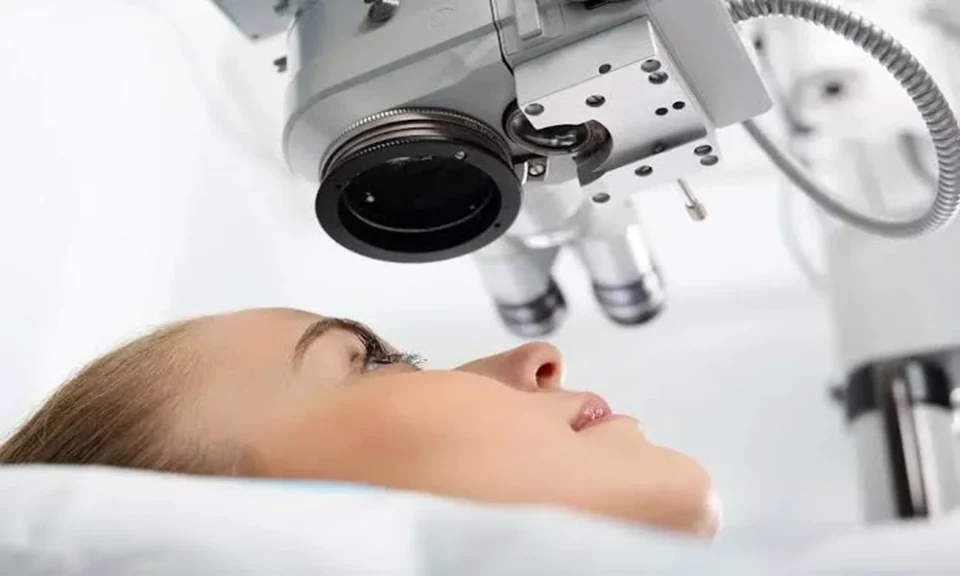
Seven hundred years ago, a monk squinting at a manuscript in Venice held the world’s most advanced vision technology in his hand: a polished glass sphere balanced on a page. Today, a surgeon reshapes a cornea in under 90 seconds. The distance between those two moments is one of the most underappreciated stories in the history of science, craft, and human ambition. This is that story, told in three distinct eras, with a practical guide to understanding where the technology now stands and where it’s headed next.
The Three Eras of Clarity: A Framework for Understanding 700 Years of Progress
Most people treat the history of vision correction as a single fuzzy arc. It’s actually three clean chapters, each defined by a different dominant technology:
- The Lens Era (1280s to 1800s): glass and later crystal ground into shapes that bend light toward the eye.
- The Precision Frame Era (1700s to 1900s): engineering that turns raw lenses into wearable, adjustable devices.
- The Surgical Era (1940s to present): permanently altering the eye’s own structure rather than compensating for it from the outside.
Each chapter started when a single artisan, scientist, or surgeon solved a problem the previous generation had decided was simply unsolvable. That pattern repeats through every decade, and it’s worth paying attention to, because the next chapter is already being written.
Where It All Started: Venice, Monks, and the First Reading Stones
The first recorded vision aids weren’t wearable at all. They were convex glass spheres, placed directly on text to magnify letters enough for aging scholars to read them. Historians credit Venetian glassblowers with producing the earliest true corrective eyeglasses somewhere between 1268 and 1300. Those first spectacles consisted of two lenses connected by a hinge and balanced on the nose with no arms, no frames, and no comfort by any modern standard.
For roughly four centuries, the basic design barely changed. Spanish craftsmen in the 1600s added ribbon loops that hung over the ears, which was a genuine usability breakthrough at the time. Then, in 1727, a British optician named Edward Scarlett introduced the over-ear rigid temple, the form factor you’d recognize as a modern glasses frame. According to Salus University’s 2019 historical review, Scarlett’s early frames set glass lenses into heavy wood, lead, or copper, and that material choice tells you everything about how far manufacturing still had to travel.
Benjamin Franklin gets the bifocal credit in 1784. He literally sawed his lenses in half and recombined them because he was tired of swapping between two pairs of glasses. Clever, inconvenient, and very Franklin. His solution stayed dominant for nearly 200 years, right up until progressive lenses appeared in the second half of the 20th century.
The Precision Frame Era: From Craft to Industrial Scale
The Industrial Revolution did for eyeglasses what it did for everything else: turned a handmade luxury into a mass-market commodity. Steel frames arrived in the early 1600s. Lightweight plastics entered in the 20th century. Anti-reflective coatings, polycarbonate lenses, and high-index materials followed. By the mid-1900s, a person could walk into a shop in most cities and walk out with a prescription pair the same day.
Optically, the precision improved enormously. Lens grinding moved from manual craft to computer-controlled fabrication, letting manufacturers hit tolerances measured in fractions of a diopter. Contact lenses emerged in meaningful commercial form in the 1940s and soft contacts arrived in 1971, giving people who disliked frames a genuine alternative. The product landscape was rich and getting richer, but all of it still worked on the same principle: put something in front of the eye to redirect light. Nobody had changed the eye itself. Not yet.
“LASIK was not formally approved by the FDA until 1999, but it didn’t take long to become the favorite offspring of refractive surgery.” The American Academy of Ophthalmology’s retrospective on laser vision correction traces that rise back to a series of experimental milestones spanning three decades, with contributions from researchers across Europe, the Middle East, and the United States.
The Surgical Era: Reshaping the Eye Itself
The leap from external correction to internal surgery required a completely different kind of thinking. The idea of physically altering the cornea to correct how it bends light traces back to a Polish missionary-surgeon named Father Waclaw Szuniewicz, who began experimenting with corneal incisions in 1948. His concept sat largely dormant for decades, refined by researchers in Europe and the Soviet Union before finally gaining traction in the United States.
The modern LASIK story has a specific patent date: June 20, 1989, when Dr. Gholam A. Peyman was granted a U.S. patent for a method of modifying corneal curvature using a surgical flap. The American Academy of Ophthalmology’s historical record of laser vision correction documents that Dr. Ioannis Pallikaris performed the first actual LASIK procedure the following year, using a version of a microkeratome originally designed by José Barraquer in 1949. By 1991, the first U.S. LASIK procedure had been performed. FDA approval for LASIK arrived in 1999, and the procedure spread fast.
Post-2000 innovations came quickly. The IntraLase femtosecond laser earned FDA approval in 2001, replacing the mechanical blade in flap creation with a far more precise laser cut. Wavefront-guided LASIK, which maps the unique optical imperfections of an individual eye and customizes the correction accordingly, received approval in 2002. These aren’t minor tweaks. Each one meaningfully expanded who could safely undergo the procedure and improved outcomes for those who did. Today, clinics like a leading ophthalmology clinic in Honolulu offer patients multiple surgical pathways, from LASIK and PRK to implantable contact lenses, because no single approach fits every corneal profile.
The Scale of the Problem Vision Correction Technology Is Solving
The stakes behind all this innovation are enormous. The World Health Organization’s World Report on Vision found that at least 2.2 billion people worldwide have a vision impairment or blindness, and of those, at least 1 billion have an impairment that could have been prevented or has yet to be addressed. That figure reframes the history of eyeglasses and laser surgery from a convenience story into something closer to a public health imperative. Seven centuries of innovation has done a great deal, but the gap between what’s technically possible and what most people can actually access remains very wide.
A Practical Timeline: Key Milestones Worth Knowing
| Year | Milestone | Significance |
|---|---|---|
| 1268-1300 | First corrective eyeglasses, Venice | Lens Era begins; scholars and monks gain reading aid |
| 1727 | Edward Scarlett invents rigid temples | Modern frame form factor established |
| 1784 | Benjamin Franklin invents bifocals | Multi-zone correction from a single lens |
| 1971 | Soft contact lenses commercialized | Comfortable daily-wear alternative to glasses |
| 1989 | LASIK patent granted to Dr. Gholam Peyman | Surgical Era formally defined |
| 1999 | FDA approves LASIK | Procedure reaches mainstream patients in the U.S. |
| 2001-2002 | Femtosecond laser and wavefront LASIK approved | Customized, bladeless surgery becomes standard |
What Comes After LASIK?
The pattern of the last 700 years suggests the next era is already underway. Implantable lenses that can correct a broader range of prescriptions than surface ablation allows are gaining ground. Corneal cross-linking procedures that slow or halt progressive conditions are now well-established. Early-stage research is exploring adaptive optics, gene therapy for inherited retinal conditions, and bionic vision prosthetics. The Lens Era gave us tools we wore on our faces. The Surgical Era gave us permanent changes to our own tissue. Whatever comes next will likely operate at a level even finer than that.
One thing that hasn’t changed across all seven centuries: the demand for precision. The Venetian glassblower grinding a lens in 1285 and the ophthalmic surgeon programming a femtosecond laser today are trying to solve the same underlying problem. They’re just working with radically different tools. Understanding where you are in that arc doesn’t just make for good history; it helps you ask better questions when you’re sitting in an exam chair deciding which technology is right for you.
